Tesla's $25k Car: Latest Rumors and What We Know

For years, the “Holy Grail” of the electric vehicle industry has been the $25,000 car. It is the price point where EVs achieve true parity with mass-market internal combustion vehicles like the Toyota Corolla and Honda Civic. Tesla CEO Elon Musk has teased this vehicle for nearly a decade, often referring to it as the “Model 2” (though that name is not official).
After a period of silence where it seemed the project might have been shelved in favor of the dedicated Robotaxi, recent reports indicate that the affordable Tesla is back on the front burner. Codenamed “Redwood,” this vehicle represents the most critical phase in Tesla’s mission to accelerate the world’s transition to sustainable energy.
Here is a deep dive into everything we know, what we suspect, and why this car matters so much.
The “Redwood” Project
According to a bombshell report from Reuters, Tesla has told suppliers to prepare for a new mass-market electric vehicle with a target production start date of mid-2025. The project, internally referred to as “Redwood,” is described as a compact crossover. This makes strategic sense; the compact SUV segment is the most popular vehicle segment globally.
Tesla has reportedly issued “requests for quotes” (RFQs) to suppliers for the Redwood model, forecasting a weekly production volume of 10,000 vehicles. That would amount to roughly 500,000 units annually from a single factory, signaling Tesla’s intent for this to be a high-volume product.
The “Unboxed” Manufacturing Process
The key to hitting the $25,000 price point isn’t just cheaper batteries; it’s a complete rethinking of how cars are built. During Tesla’s Investor Day in 2023, the company unveiled its “Next-Gen Platform” and a revolutionary manufacturing technique called the “Unboxed Process.”
Traditional car manufacturing follows a linear assembly line, a method pioneered by Henry Ford over a century ago. The car body is stamped, welded, painted, and then moves down a line where parts are added to it. This is inefficient because workers often trip over each other, and installing parts inside a painted metal box is slow and difficult.
Tesla’s Unboxed Process proposes breaking the car into distinct sub-assemblies (front, rear, floor, sides, etc.). Each section is assembled independently, painted, and fully equipped with wiring, interior, and seats before being joined together at the very end.
Tesla claims this could:
- Reduce manufacturing footprint by 40%
- Cut production costs by up to 50%
- Significantly reduce assembly time
If Tesla can pull this off, it would be a manufacturing revolution comparable to the moving assembly line itself. It is the only way to make a profit on a $25,000 EV while maintaining Tesla’s industry-leading margins.
Design and Specs: What to Expect
While we haven’t seen a prototype yet, we can make educated guesses based on leaks and Tesla’s design philosophy.
- Form Factor: As mentioned, it will likely be a compact crossover, smaller than the Model Y. Think of it as a “Model Q” or a hatchback-style vehicle similar to the Volkswagen ID.3 or MG4.
- Battery: It will almost certainly use Lithium Iron Phosphate (LFP) batteries. LFP batteries are cheaper, more durable, and safer than nickel-based batteries, though they have lower energy density. For a mass-market car, this is the right trade-off.
- Range: Expect a range of around 250-300 miles. Tesla knows that “range anxiety” is still a barrier, and they are unlikely to release a car with less than 250 miles of real-world range.
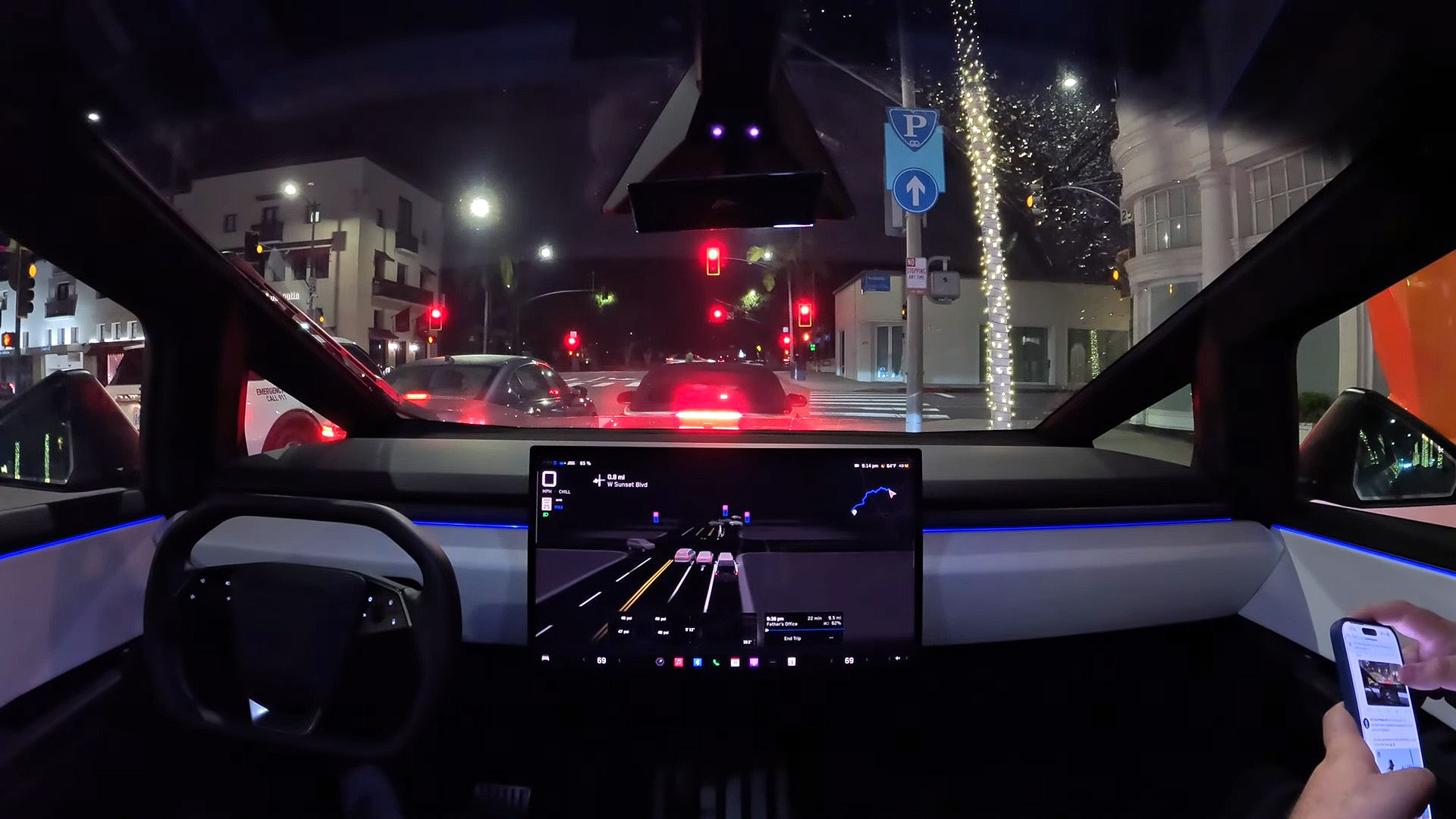
- Interior: The interior will likely be even more minimalist than the Model 3. Expect a single central screen, no stalks (using steering wheel buttons for turn signals and shifting), and a heavy reliance on software over hardware controls.
- Autopilot: Hardware 4 (or 5 by then) will be standard. The car is being designed with autonomy in mind. Musk has previously suggested the car might not even have a steering wheel, though analysts believe a steering wheel version will be necessary for regulatory approval and consumer acceptance in the near term.
The Robotaxi Connection
The “Redwood” platform is expected to underpin two vehicles: the consumer-focused $25k car and a dedicated Robotaxi. The Robotaxi would be designed purely for autonomous ride-hailing, likely lacking a steering wheel and pedals entirely.
There has been internal conflict at Tesla about which vehicle to prioritize. Walter Isaacson’s biography of Elon Musk revealed that Musk wanted to go “all in” on the Robotaxi and skip the steering-wheel version. However, Tesla executives convinced him to build both, as the consumer car is needed to keep sales growing while full autonomy is perfected.
The Chinese Threat
Why the urgency? In a word: China.
Chinese automakers like BYD, MG, and Xiaomi are producing high-quality, affordable EVs that are flooding markets in Europe, Asia, and South America. The BYD Seagull, for example, sells for under $12,000 in China and offers decent range and build quality.
Tesla is currently the only Western automaker that can compete with Chinese companies on cost, but its lineup is aging. The Model 3 and Model Y are premium vehicles. To compete globally and achieve its goal of 20 million vehicles per year by 2030, Tesla needs a mass-market fighter.
Timeline and Reality Check
Tesla’s timelines are notorious. “Mid-2025” could easily slip to 2026 or 2027. Ramping up a new manufacturing process (Unboxed) carries immense execution risk. We saw the “production hell” Tesla went through with the Model 3. The Next-Gen platform could face similar teething issues.
Furthermore, the $25,000 price tag is a target. Inflation and raw material costs could push that higher. However, with the Inflation Reduction Act (IRA) tax credits in the US, a $30,000 Tesla could effectively become a $22,500 car for many buyers, making it an irresistible value proposition.
Conclusion
The Tesla “Model 2” / Redwood is the most important car in the company’s pipeline. It is not just another model; it is the key to mass adoption. If Tesla succeeds, it will cement its dominance for another decade. If it fails or is delayed too long, it risks ceding the mass market to Chinese competitors. The stakes couldn’t be higher.